Most Orange County homeowners have heard of mold. Some have dealt with water damage firsthand. But there’s a wood-destroying organism lurking in homes across the region that rarely gets the attention it deserves: Poria fungus. Our Poria fungus remediation team at Orange County Restoration Services has seen Poria quietly devour structural framing, subfloor sheathing, and support beams in homes where the owners had no idea anything was wrong.
Poria (sometimes called Meruliporia incrassata) is a wood-decay fungus. Think of it as termites’ lesser-known cousin, except it doesn’t eat wood the way an insect does. It rots it from the inside out. And here’s the part that catches most people off guard: Poria can transport its own water supply through root-like strands, meaning it doesn’t need a visible leak to thrive.
What Is Poria Fungus, Exactly?
Poria is a brown rot fungus that breaks down cellulose fibers in wood. Once it takes hold, affected wood turns brown, becomes brittle, and crumbles into cube-shaped pieces. Contractors sometimes call this “cubical fracture,” and it’s one of the clearest indicators that Poria has been active for a while.
What sets Poria apart is its ability to grow rhizomorphs, thick, root-like strands that conduct water and can extend several feet through soil, concrete, and foundation walls. According to the U.S. Forest Service, these rhizomorphs allow the fungus to carry moisture to otherwise dry wood. That means Poria can attack structural lumber far from the original moisture source.
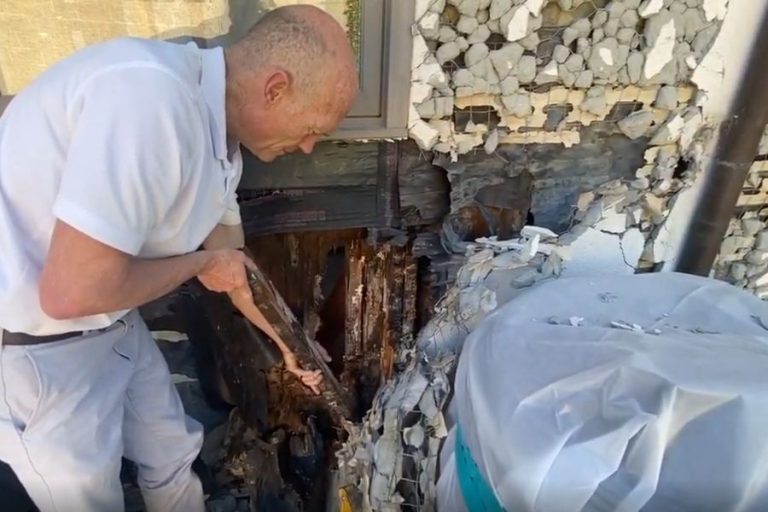
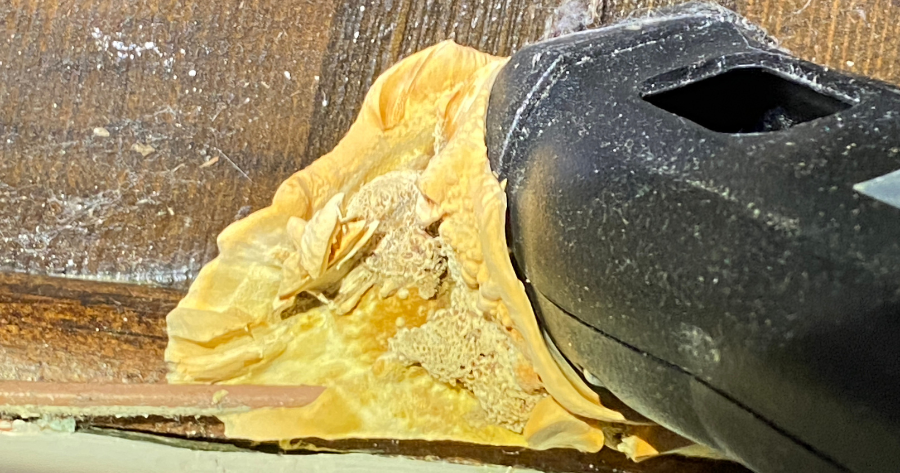
Poria fungus breaking down wood framing. Notice the brown discoloration and crumbling texture typical of advanced brown rot.
Why Orange County Homeowners Should Be on Alert
You might wonder why a fungus would thrive in a place known for sunshine. Fair question. But Orange County’s climate creates some ideal conditions for Poria, especially in older coastal homes in Newport Beach, Corona del Mar, and Balboa Island.
Many of these neighborhoods have homes with raised foundations and crawl spaces. Morning fog, ocean moisture, and over-irrigated landscaping push humidity higher than most homeowners realize. Add a minor plumbing leak or undetected slab leak that goes unnoticed for a few months, and you’ve given Poria everything it needs.
Worried About Hidden Damage in Your Home?
If you’ve noticed musty smells, soft spots in flooring, or unexplained moisture, don’t wait. Our IICRC-certified team can assess the situation and help you understand what you’re dealing with.
Warning Signs That Poria Might Be in Your Home
Catching Poria early limits damage. Here are the key things to watch for:
- Soft or spongy spots in flooring, especially near bathrooms, kitchens, or exterior walls
- Wood that looks darkened or cracked in a blocky, cube-like pattern
- A persistent musty or earthy smell in crawl spaces, closets, or lower-level rooms
- Visible white or cream-colored strands (rhizomorphs) on foundation walls or along pipes
- Doors or windows that suddenly stick, which can indicate structural shifting from wood decay
- Sagging or uneven floors, particularly in older homes with raised foundations
Some of these overlap with general water damage symptoms. Without a trained eye, it’s easy to assume you’re dealing with a simple moisture issue when the real problem is structural decay.
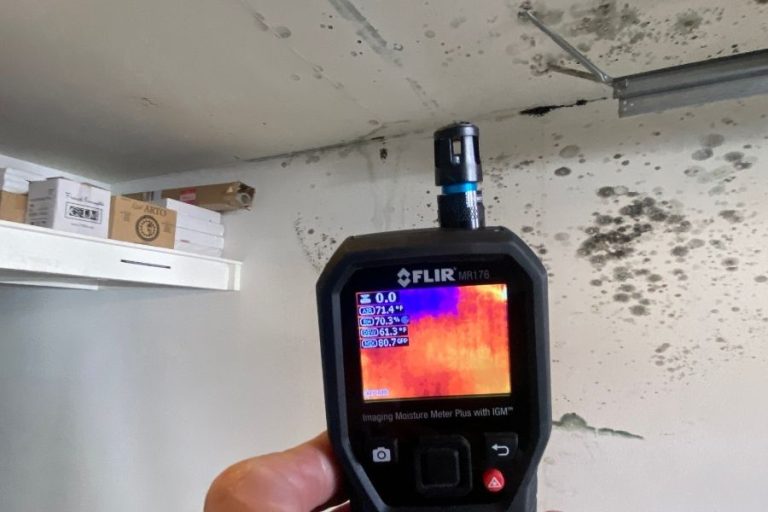
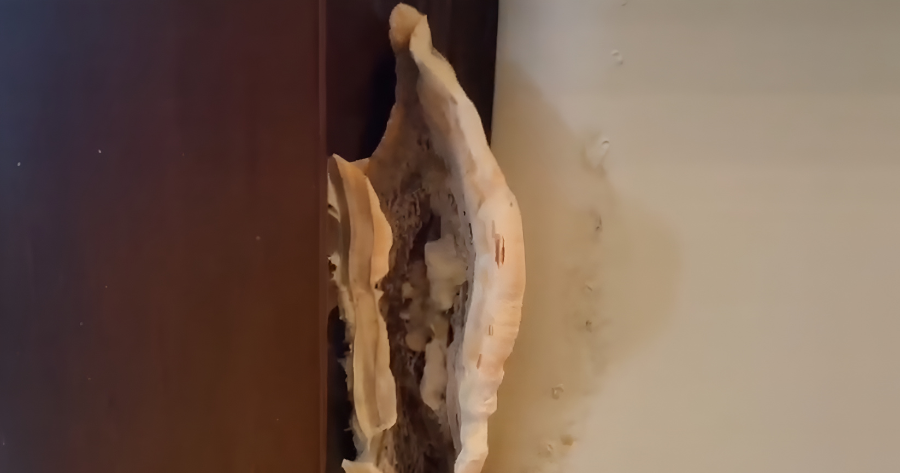
Poria growth spreading across drywall. The white rhizomorph strands indicate active fungal colonization behind the wall.
How Is Poria Different from Common Household Mold?
People sometimes lump Poria in with mold. While they’re both fungi, the damage profiles and remediation approaches are very different.
| Factor | Poria Fungus | Common Household Mold |
|---|---|---|
| Primary damage | Destroys structural wood | Surface staining and deterioration |
| Water needs | Transports its own water via rhizomorphs | Requires direct, ongoing moisture |
| Visibility | Often hidden inside walls and under floors | Usually visible on surfaces |
| Timeline | Months to years | Can appear within 24 to 48 hours |
| Remediation | Structural repair often required | Surface treatment and drying |
The biggest distinction? Mold is a surface problem. Poria attacks wood’s structural integrity. Left unchecked, it can compromise floor joists, wall studs, sill plates, and load-bearing elements. That’s an entirely different category of repair.
What Should You Do If You Suspect Poria?
Don’t ignore it. Unlike surface mold you might be tempted to wipe down, there’s no DIY fix for Poria. The fungus lives inside structural materials, and addressing it requires identifying the full scope of damage, eliminating the moisture source, and removing compromised wood.
- Document what you see. Take photos of discolored wood, soft spots, or visible strands. Note when you first noticed them.
- Check for moisture sources. Look under sinks, around water heaters, near exterior hose bibs, and in crawl spaces.
- Don’t disturb the area. Pulling apart walls yourself could spread spores or hide the full extent of damage.
- Call a qualified professional. You need someone experienced with wood-destroying organisms. Our team at Orange County Restoration Services offers thorough mold inspection and testing to identify Poria and build a targeted remediation plan.
- Contact your insurance provider. Coverage for fungus damage varies. Having documentation from step one helps with your claim.
If you’re in Newport Beach or a surrounding coastal community and you’ve spotted any hidden water damage warning signs, have a professional look specifically for Poria. Coastal homes with raised foundations are especially vulnerable.
A Quick Note on Prevention
You can’t Poria-proof a home completely, but you can make it less inviting. Keep crawl spaces dry and ventilated. Fix leaks quickly, even small ones. Make sure landscaping drains away from your foundation. If your home was built before the 1980s, consider an annual crawl space inspection. Many homeowners on Balboa Island and in Corona del Mar live in homes old enough to be at elevated risk.
Frequently Asked Questions About Poria Fungus
Can Poria fungus make you sick?
Poria is primarily a structural threat, not a respiratory one. It doesn’t produce the same airborne mycotoxins that trigger allergic reactions. However, advanced infestations often come with secondary mold growth due to elevated moisture, which can impact indoor air quality. The EPA recommends professional evaluation for any situation involving persistent moisture and fungal growth.
Does homeowners insurance cover Poria damage in California?
It depends on your policy and the cause. Many California policies limit or exclude fungus damage. However, if Poria growth resulted from a covered peril like a sudden pipe burst, you may have a claim for the water damage and resulting remediation. Review your policy language carefully and document the damage thoroughly for your adjuster.
How long does it take for Poria to cause serious structural damage?
Poria moves slowly compared to mold, typically taking several months to a few years to cause significant structural compromise. The danger is that this slow timeline means damage is often extensive by the time anyone notices. Regular crawl space inspections are the best defense, especially for coastal homes where ambient humidity supports fungal activity year-round.
What’s the difference between Poria and dry rot?
Poria is actually a type of dry rot. “Dry rot” refers to brown rot fungi that leave wood looking dry and crumbly, broken into cube-shaped pieces, even though moisture was part of the decay process. Poria incrassata is one of the most aggressive dry rot species because of its ability to transport water through rhizomorphs, letting it attack wood that isn’t in direct contact with a moisture source.