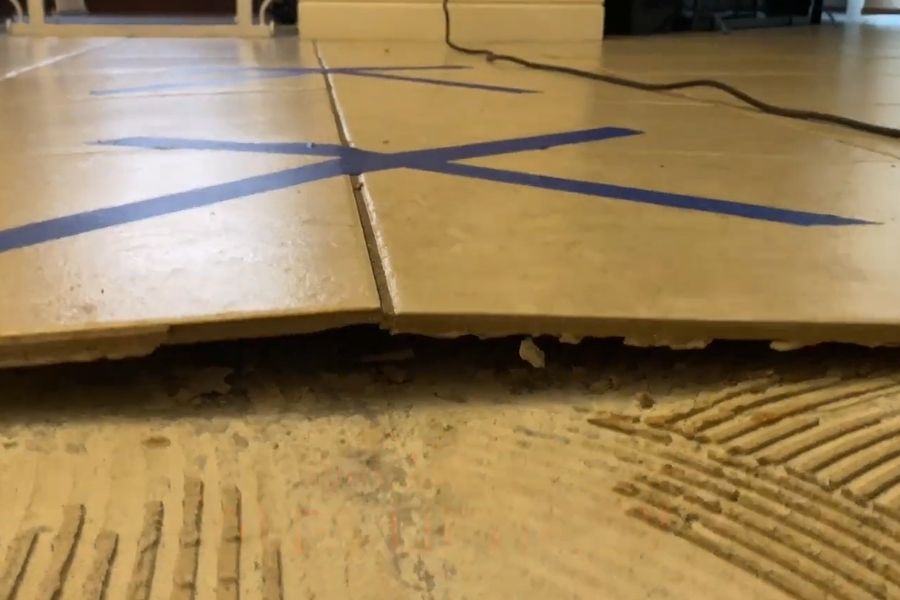
If you’ve noticed tiles starting to buckle, lift, or feel loose underfoot, there’s a good chance water is hiding underneath. Water damage under tile floors is one of the most common issues we deal with at Orange County Restoration Services, Inc., and it catches Newport Beach homeowners off guard constantly. The tiles aren’t the problem. They’re the messenger. Trapped moisture is breaking down the adhesive and pushing everything upward from below.
Our team is IICRC-certified in water damage restoration, and we’ve pulled up tile floors across Newport Beach, Corona del Mar, and Balboa Island where homeowners had no idea water had been sitting underneath for weeks.
Why Does Water Get Trapped Under Tile?
Tile creates a near-watertight seal on the surface. Great for everyday spills. But when water enters from below or seeps through deteriorating grout, it gets trapped between tile and subfloor with nowhere to go, slowly dissolving the thinset adhesive.
Several common sources push water into that space:
- Slab leaks: Pressurized water lines running beneath your concrete slab develop pinhole leaks, especially in older Newport Beach homes with copper piping. Salt air accelerates corrosion, and the water migrates upward through the concrete.
- Appliance failures: Dishwashers, refrigerators, and washing machines connect to supply lines that degrade over time. A slow drip can send water under adjacent tile for weeks unnoticed.
- Foundation seepage: Coastal homes sit on soil that shifts with moisture levels. Rising groundwater during high tides pushes moisture through foundation cracks into the subfloor.
- Grout deterioration: Old or cracked grout lets water from mopping and shower overspray work its way down to the adhesive layer over months.
If you suspect a slow leak, our guide on the five signs of a slab leak covers early warning signals.
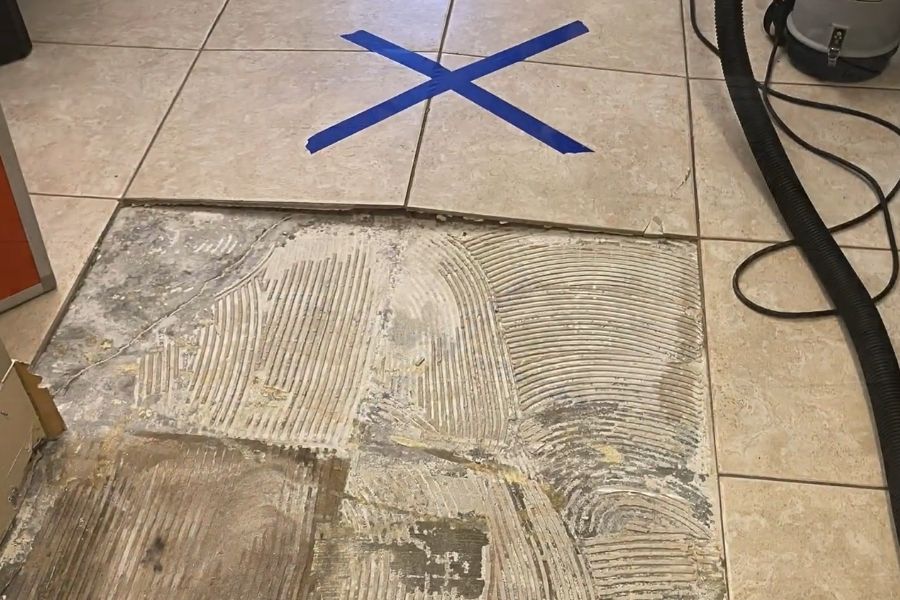
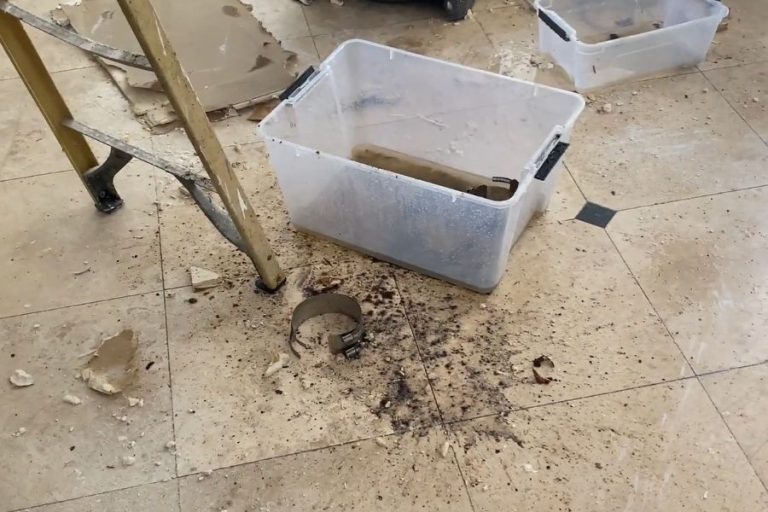
Removing tiles often reveals moisture damage that wasn’t visible from the surface.
How Water Breaks the Bond Between Tile and Subfloor
Tile adhesive relies on a dry bond. When water saturates that layer, the adhesive softens and loses grip. Tiles shift. You hear a hollow sound when tapping them, or feel them rock underfoot. That hollow sound is air and moisture in the gap where adhesive used to hold firm.
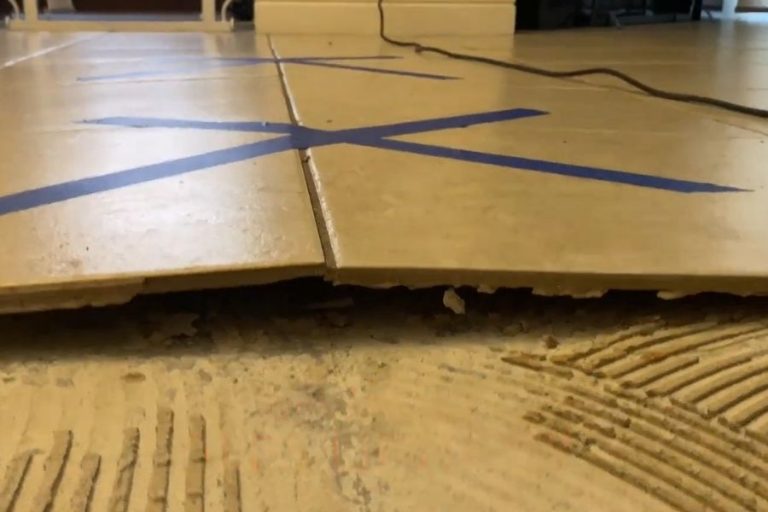
In advanced cases, water pushes tiles upward. This is called “tenting,” where tiles literally lift away from the floor at grout lines. We’ve walked into Newport Beach kitchens where a homeowner thought they had a structural issue, and it turned out to be a dishwasher supply line leaking a few ounces a day for months.
The subfloor takes damage too. Plywood swells, warps, and rots. Concrete develops conditions perfect for mold, since trapped moisture and organic components in adhesive provide what spores need. According to the EPA’s guide on mold and moisture, mold can start growing on damp surfaces within 24 to 48 hours.
Think Water Might Be Under Your Tile?
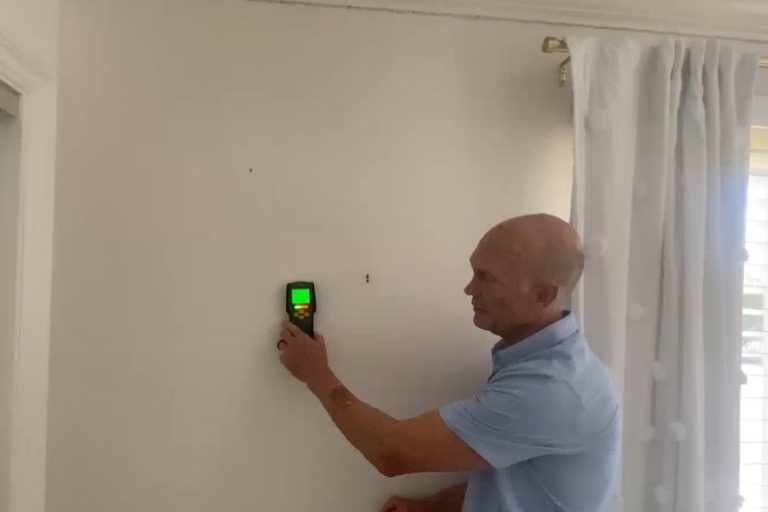
Our team uses thermal imaging and moisture meters to find hidden water without tearing up your floors. We respond within 60 minutes across Newport Beach.
Warning Signs to Check For
Catching water under tile early saves money and headaches. Here’s what to watch for.
| Warning Sign | What It Means | Urgency |
|---|---|---|
| Hollow sound when tapping tiles | Adhesive failure, air or water in the gap | Moderate |
| Tiles rocking underfoot | Bond compromised, water likely present | High |
| Tiles lifting or “tenting” at grout lines | Significant water pressure from below | Urgent |
| Musty smell near tiled areas | Mold likely growing under or around tiles | Urgent |
| Warm spots on the floor | Hot water slab leak underneath | Urgent |
Newport Beach’s coastal humidity slows evaporation and gives trapped water more time to cause damage before visible signs appear. Homeowners in Corona del Mar and Balboa Island should be especially watchful, since many homes sit on sandy soil near the waterfront.
Why Newport Beach Homes Are Particularly Vulnerable
A lot of homes in the Newport Beach area were built decades ago. Older construction means older plumbing, and copper pipes exposed to salt air corrode faster than pipes inland. We’ve pulled tiles in homes only 25 to 30 years old and found actively leaking supply lines underneath.
Sandy soils near the waterfront channel moisture toward foundations during high water table events. King tides push groundwater up several times a year, and that moisture finds its way through foundation cracks into the space beneath your tile. For a deeper look at how leaks develop, read our post on finding the source of water damage.
What Happens When You Ignore It
Within 24 to 48 hours, mold spores start colonizing the damp subfloor and adhesive layer. You won’t see it beneath the tile. Within a couple of weeks, mold can spread into nearby drywall, the slab, and adjacent rooms.
The IICRC S500 Standard emphasizes that prompt extraction and structural drying prevent secondary damage. When water sits under tile untreated, you’re looking at a chain reaction: adhesive failure, subfloor deterioration, mold growth, and eventually structural repairs that cost many times more than the original problem.
We had a job in Corona del Mar where a homeowner noticed loose kitchen tiles but assumed it was a grout issue. By the time they called, a slow supply line leak had been sitting under the tile for nearly two months. The subfloor had rotted, mold had spread under the entire floor, and the job required professional mold remediation on top of water damage work.
How Our Team Handles Water Under Tile
We start with diagnostics, not demolition. Thermal imaging cameras map moisture patterns beneath the tile without removing anything. Moisture meters confirm readings and give us data to track drying.
If removal is necessary, we carefully take up tiles in the affected area, extract standing water with commercial-grade equipment, and place industrial dehumidifiers and air movers to dry everything thoroughly. When mold is present, our mold inspection and testing team takes samples and performs remediation before any flooring goes back down.
For homeowners across Newport Beach, we typically respond within 60 minutes. Every hour moisture sits there increases the scope and cost of repair. For more on flooring restoration options, check out our post on whether water-damaged flooring can be saved.
Frequently Asked Questions
How can I tell if there’s water under my tile without removing it?
Tap tiles with your knuckle or a small rubber mallet. A hollow sound compared to surrounding tiles means the adhesive has failed, usually because of moisture. You can also check for tiles that rock when stepped on, feel for warm spots indicating a hot water leak, or look for new grout cracks. Professionals use thermal imaging and moisture meters to confirm water presence without removal.
Does insurance cover water damage under tile floors?
Most homeowners policies cover sudden and accidental water damage like a burst pipe or appliance failure. Damage from long-term neglect or gradual wear, such as slowly deteriorating grout, is typically excluded. Document everything with photos before cleanup and contact your insurance company promptly.
How long does it take to dry a subfloor after tile removal?
With professional equipment, most concrete subfloors dry within 3 to 5 days. Plywood may take slightly longer depending on saturation. Coastal humidity in Newport Beach can extend drying times, which is why industrial dehumidifiers are essential. Your restoration team should take daily moisture readings and only clear for reinstallation when levels meet acceptable standards.