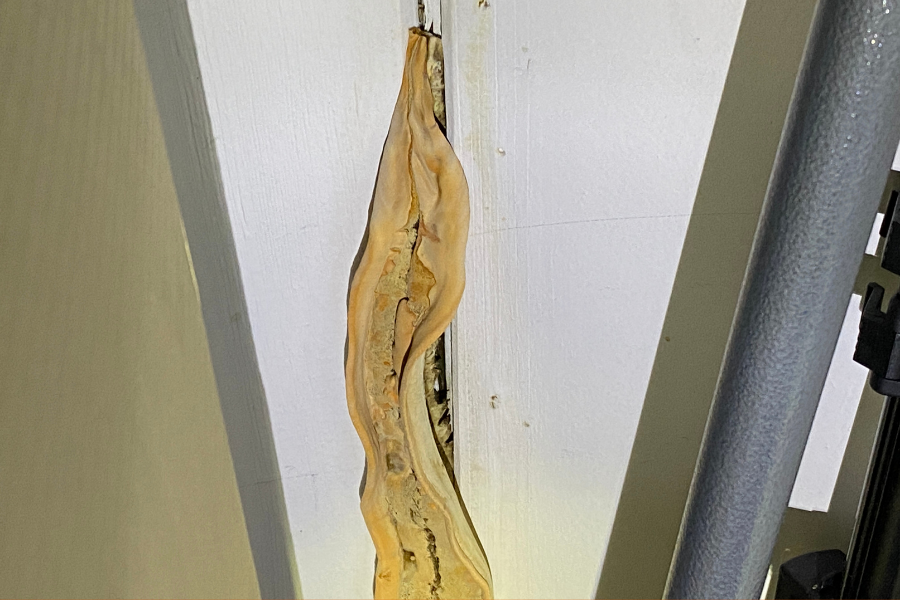
Most homeowners in Orange County have heard of mold. Plenty have dealt with dry rot. But Poria? That one catches people completely off guard, and it’s often the most destructive of the three. Our team at Orange County Restoration Services handles all of these through our Poria fungus remediation and restoration work, and we can tell you firsthand: knowing the difference can save your home from serious structural damage.
These three problems look similar on the surface. They all involve fungal growth and they all love moisture. But how they spread, the damage they cause, and how you deal with them are very different. Let’s break each one down.
What Is Poria (and Why Should You Care)?
Poria is an aggressive wood-destroying fungus that most homeowners have never heard of. Unlike typical mold or dry rot, Poria can transport its own water supply through root-like structures called rhizomorphs. It doesn’t need a constant moisture source to keep spreading. It creates its own.
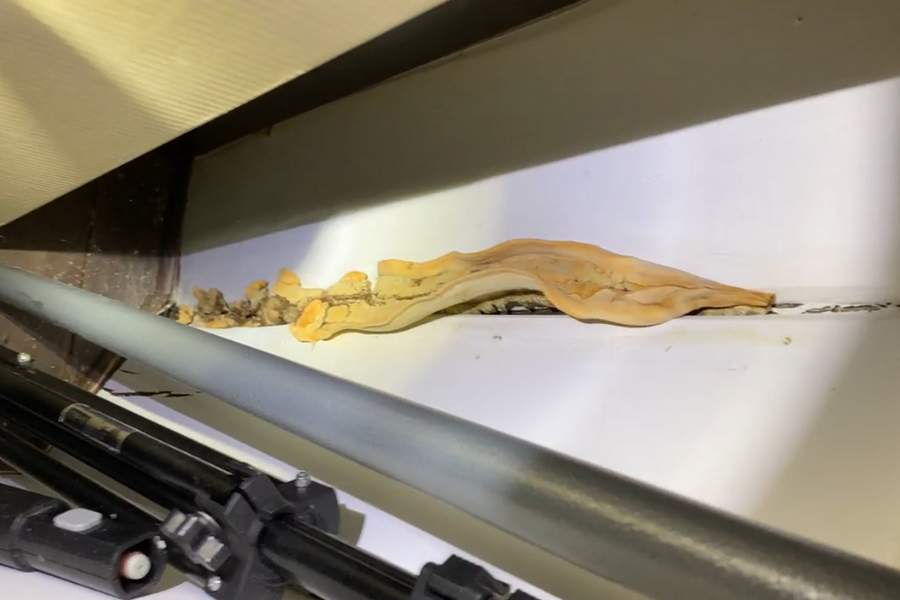
Poria fungus growth on drywall. This type of spread can happen well beyond the original moisture source.
Traditional fungal problems stay close to the water that feeds them. Poria can start in a damp crawl space and work its way through framing, subfloors, and wall cavities without any obvious leak nearby. We’ve seen cases in Newport Beach homes where Poria traveled several feet from the original moisture source, eating through structural lumber the entire way.
According to the EPA’s guidance on indoor fungal growth, any wood-destroying fungus requires professional remediation. Poria demands especially aggressive treatment because of its ability to self-hydrate.
Think You Might Have Poria, Dry Rot, or Mold?
Don’t guess. The wrong approach can make things worse. Our IICRC-certified team can identify exactly what you’re dealing with.
Dry Rot: The Slow Destroyer
Dry rot is caused by fungi that break down the cellulose and lignin in wood, essentially digesting the structural fibers. The name is misleading, though. “Dry” rot actually requires moisture to get started, typically around 20% moisture content in the wood. Once established, the affected wood dries out and becomes brittle, crumbly, and weak.
In Orange County, dry rot is common in areas with poor ventilation. Crawl spaces, enclosed eaves, window frames, and deck connections are frequent problem spots. We see it often in older homes around Newport Beach where coastal humidity and aging construction create perfect conditions.
The key difference from Poria? Dry rot stays put. Fix the moisture problem and the fungus stops growing, though damaged wood still needs replacement.
Signs of Dry Rot to Watch For
- Wood that crumbles when touched, breaking into cube-shaped pieces
- A musty, damp smell in crawl spaces or attics
- Paint cracking or peeling on exterior wood surfaces
- Visible fungal growth resembling white or grey cotton-like patches
- Doors or windows that suddenly stick, indicating warping from damage beneath
Mold: The One Everyone Knows
Mold is the most recognized of the three. Unlike Poria and dry rot, mold doesn’t typically destroy wood structurally. Instead, it colonizes surfaces, produces spores, and can cause significant indoor air quality problems. Some species like Stachybotrys (“black mold”) produce mycotoxins that trigger respiratory issues and allergic reactions.
The CDC recommends addressing all indoor mold regardless of species, since even common mold signals excess moisture that leads to bigger problems. In Orange County, mold thrives year-round. After any water damage event, mold can begin growing within 24 to 48 hours if the area isn’t properly dried.
Side-by-Side Comparison
| Factor | Poria | Dry Rot | Mold |
|---|---|---|---|
| Needs constant moisture? | No, transports its own water | Yes, needs 20%+ moisture in wood | Yes, needs ongoing moisture |
| Structural damage? | Severe, compromises framing | Moderate to severe over time | Minimal, mostly surface-level |
| Health risks? | Low (structural concern primary) | Low (structural concern primary) | Moderate to high (respiratory) |
| Spread speed? | Fast, even into dry areas | Slow, stays near moisture | Moderate, follows moisture |
| Fix the leak, problem stops? | No, Poria keeps going | Yes, fungus stops growing | Growth stops, mold remains |
| Remediation cost? | High (extensive removal) | Moderate (localized repairs) | Varies widely by scope |
Why Getting the Right Diagnosis Matters
Treating Poria like ordinary mold won’t work. Treating mold like dry rot misses the health component. And assuming dry rot is “just cosmetic” can lead to structural failure. Each problem requires a different strategy, different equipment, and a different scope of work.
We’ve responded to homes in the Balboa Island area where a previous company treated a Poria infestation as standard mold. They cleaned the visible growth, sealed things up, and called it done. Months later, the fungus had spread further because nobody addressed the rhizomorph network feeding it.
The Real Cost of Misdiagnosis
24-48 hrs
Mold begins growing after water damage
2x
Average cost increase when Poria is misidentified
Several ft
Distance Poria can spread from original moisture source
Our IICRC-certified technicians use moisture mapping, thermal imaging, and direct inspection to determine exactly which type of fungal issue a home is dealing with. That accurate diagnosis separates effective remediation from a temporary fix.
What to Do If You Spot Something Suspicious
Don’t panic, but don’t ignore it either. All three problems get worse with time. Here’s a straightforward checklist:
- Don’t disturb it. Poking at mold releases spores. Pulling at rotted wood can reveal structural problems that need professional support.
- Document what you see. Take photos and note the location, size, and any smells.
- Check for moisture sources. Look for signs of leaks or water intrusion nearby.
- Call a certified professional. An IICRC-certified restoration company can identify what you’re dealing with and recommend the right course of action.
- Contact your insurance company. Your homeowner’s policy may cover part or all of the remediation.
If you’re in the Newport Beach area, including Corona del Mar, Balboa Island, or Lido Island, our team is available 24/7. We’ve been handling complex fungal remediation across Orange County for years. Reach out to us and we’ll help you figure out the best next step.
Frequently Asked Questions
Can Poria spread through concrete or soil?
Yes. Poria produces rhizomorphs, root-like structures that grow across concrete, soil, and other non-wood materials to reach new wood sources. This ability to bypass barriers is what makes Poria uniquely dangerous compared to dry rot or mold.
Will fixing a water leak stop Poria from spreading?
Not necessarily. Unlike dry rot and mold, Poria transports moisture through its rhizomorph network. Fixing the original leak is important, but Poria requires direct remediation including removal of all affected wood and the rhizomorph network.
How can I tell if I have mold versus dry rot?
Mold appears as discolored patches on surfaces and produces a musty odor, but usually doesn’t compromise structural strength. Dry rot causes wood to become brittle and crumbly, often breaking into cube-shaped fragments. If the wood is deteriorating and losing strength, you’re likely dealing with dry rot rather than surface mold.
Is Poria common in Orange County homes?
Poria is less common than mold or dry rot but does occur in Orange County, especially in homes with crawl spaces, older plumbing, or undetected moisture problems. Coastal communities like Newport Beach with higher humidity can see Poria where small leaks create the initial conditions it needs.