If you’ve noticed dark spots creeping across your bathroom ceiling, you’re not imagining things. Bathroom ceiling mold is one of the most common calls we get from Newport Beach homeowners, and the cause is almost always the same: too much steam with nowhere to go. Our mold remediation specialists see this pattern constantly, especially in homes without proper exhaust ventilation. The good news? It’s very fixable. And once you understand why it happens, it’s very preventable.
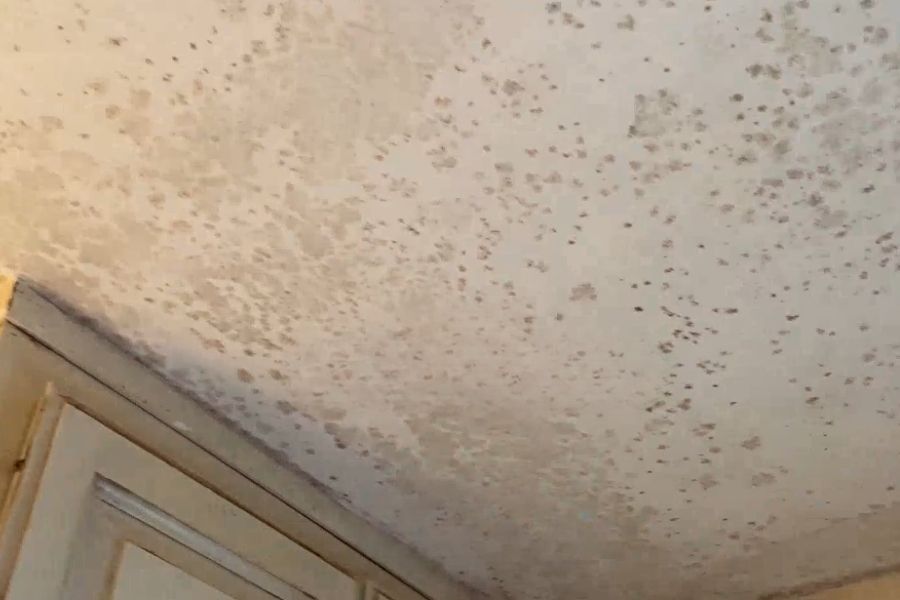
Bathroom ceiling mold is a common issue in Newport Beach homes without proper ventilation.
Why Does Mold Grow on Bathroom Ceilings?
Bathroom ceilings grow mold because they trap warm, humid air with no way to escape. Every hot shower sends moisture into the air. That moisture rises, hits the cooler ceiling surface, and condenses. Without a working exhaust fan, the ceiling stays damp for hours after each shower.
Mold spores are always present in indoor air. Invisible and normal under dry conditions, they start colonizing any damp surface with a bit of organic material (think ceiling paint or drywall paper) within 24 to 48 hours. According to the EPA, controlling moisture is the most effective way to control indoor mold. Full stop.
Newport Beach homes face a specific challenge here. Coastal humidity already runs higher than inland Orange County. Add long hot showers and an undersized or missing exhaust fan, and you’ve created near-perfect mold conditions, not just in summer, but year-round.
Seeing spots on your bathroom ceiling?
Don’t wait for it to spread. Our IICRC-certified team can assess what you’re dealing with and give you a clear picture of next steps.
The Real Culprit: Long Hot Showers Without Ventilation
We’ve seen it repeatedly: a family with kids who love long steamy showers, a bathroom with no ceiling fan, and within months a ceiling covered in dark growth. It’s not a hygiene problem. It’s an airflow problem.
Check out this video where our team walks through exactly this scenario:
See how long showers and poor ventilation lead to bathroom ceiling mold.
When steam has nowhere to go, it settles on your ceiling. Most bathroom fans are rated in CFM (cubic feet per minute). The standard guideline is one CFM per square foot of bathroom space. A 60-square-foot bathroom needs at least a 60 CFM fan, and many contractors recommend sizing up.
Is Your Bathroom at Risk? Quick Checklist
| Condition | Low Risk | High Risk |
|---|---|---|
| Exhaust fan present? | Yes, working | No, or broken |
| Fan left on after showers? | 15-20 min after | Off right away |
| Shower habits | Quick, cooler showers | Long, very hot showers |
| Ceiling paint finish | Semi-gloss or gloss | Flat or matte paint |
| Location | Inland area | Coastal (Newport Beach) |
How to Stop Bathroom Ceiling Mold From Coming Back
Cleaning mold off a ceiling without fixing ventilation is like mopping during a rainstorm. You’ll be back at it in a few months. These four steps address the actual problem.
1. Install or Upgrade Your Exhaust Fan
This is the most important step. If your bathroom has no fan, get one installed. If the fan is old or noisy, it may not be doing its job. Look for a model rated for your room size, or consider one with a built-in humidity sensor that runs automatically when moisture rises.
2. Run the Fan After the Shower Ends
Leaving it on during the shower isn’t enough. Run it for at least 15 to 20 minutes after you’re done. That window clears residual steam before it settles on the ceiling.
3. Repaint With a Semi-Gloss Finish
Flat paint is porous and holds moisture. Semi-gloss or gloss ceiling paint creates a harder, less absorbent surface that dries faster and resists mold. After any remediation, always repaint with mold-inhibiting primer first, then a semi-gloss topcoat.
4. Dial Back the Water Temperature
The hotter the shower, the more steam it produces. Dropping the temperature just a few degrees makes a real difference. Not cold, just less scalding.
If mold has already spread into drywall or wall surfaces, it’s a different situation. Read our post on surface mold vs. serious mold problems to know what you’re really dealing with before picking up a sponge.
When Is It Time to Call a Professional?
Small surface patches caught early can sometimes be cleaned without professional help. But there are clear situations where DIY makes things worse, not better.
Call a professional if:
- Growth has spread to the upper walls, not just the ceiling
- The ceiling feels soft or damaged
- Anyone in the home has asthma, allergies, or respiratory issues
- The mold returns within weeks of cleaning
Our mold inspection and testing services give you a clear, honest assessment of the scope without the pressure tactics. We tell you exactly what’s there and what it takes to fix it.
In neighborhoods like Balboa Island and Corona del Mar, many homes have older construction and limited attic ventilation, which means mold can run deeper than it looks on the surface. We’ve worked through those situations before. See how our team handled a mold remediation project on Balboa Island for a real-world example.
We serve Newport Beach, Corona del Mar, Balboa Island, Lido Island, and the surrounding area. Visit our Newport Beach water damage and mold services page to learn more about how we work in your neighborhood.
Not sure if your mold is a surface issue or something deeper?
With over 38 years of expertise, our IICRC-certified team has seen it all. We’ll give you a straight answer.
What About the Health Effects?
For most healthy adults, small amounts of bathroom ceiling mold aren’t an immediate crisis. But prolonged exposure can irritate airways, trigger allergies, and cause ongoing problems for people with asthma or weakened immune systems. The CDC recommends removing mold regardless of type, since all molds can produce health effects under the right conditions.
Children and elderly family members are more sensitive. If someone in your home has unexplained coughing or congestion that eases up outside the house, your bathrooms are a good place to start looking. And remember, bathrooms aren’t the only room where this happens. Our post on mold content cleaning in Corona del Mar shows how moisture problems can spread into belongings throughout a home when left unchecked.
Frequently Asked Questions
Why does mold grow on bathroom ceilings specifically?
Bathroom ceilings collect warm, humid air from showers. That moisture condenses on the cooler ceiling surface and stays damp, especially without exhaust ventilation. Mold spores in the air settle on that damp surface and begin growing within 24 to 48 hours.
Can I clean bathroom ceiling mold myself?
Small surface patches on painted ceilings can sometimes be cleaned with a diluted antimicrobial solution. But without fixing the ventilation problem, it will come back. If it has penetrated drywall or keeps returning after cleaning, professional remediation is the right call.
How do I stop bathroom mold from coming back after cleaning?
Fix ventilation first. Install or upgrade your exhaust fan, leave it running 15 to 20 minutes after each shower, and repaint with mold-inhibiting primer and a semi-gloss ceiling paint. Cleaning alone without addressing airflow is a short-term fix.
Is bathroom ceiling mold dangerous for my family?
Small amounts pose limited short-term risk to healthy adults. Prolonged exposure can worsen respiratory conditions, allergies, and asthma. Children, elderly individuals, and anyone with a compromised immune system are more vulnerable. The CDC recommends removing all mold regardless of type.